
Article
SEO for Web Designers: Mastering Website Optimization
7/18/2026 · 5 min read
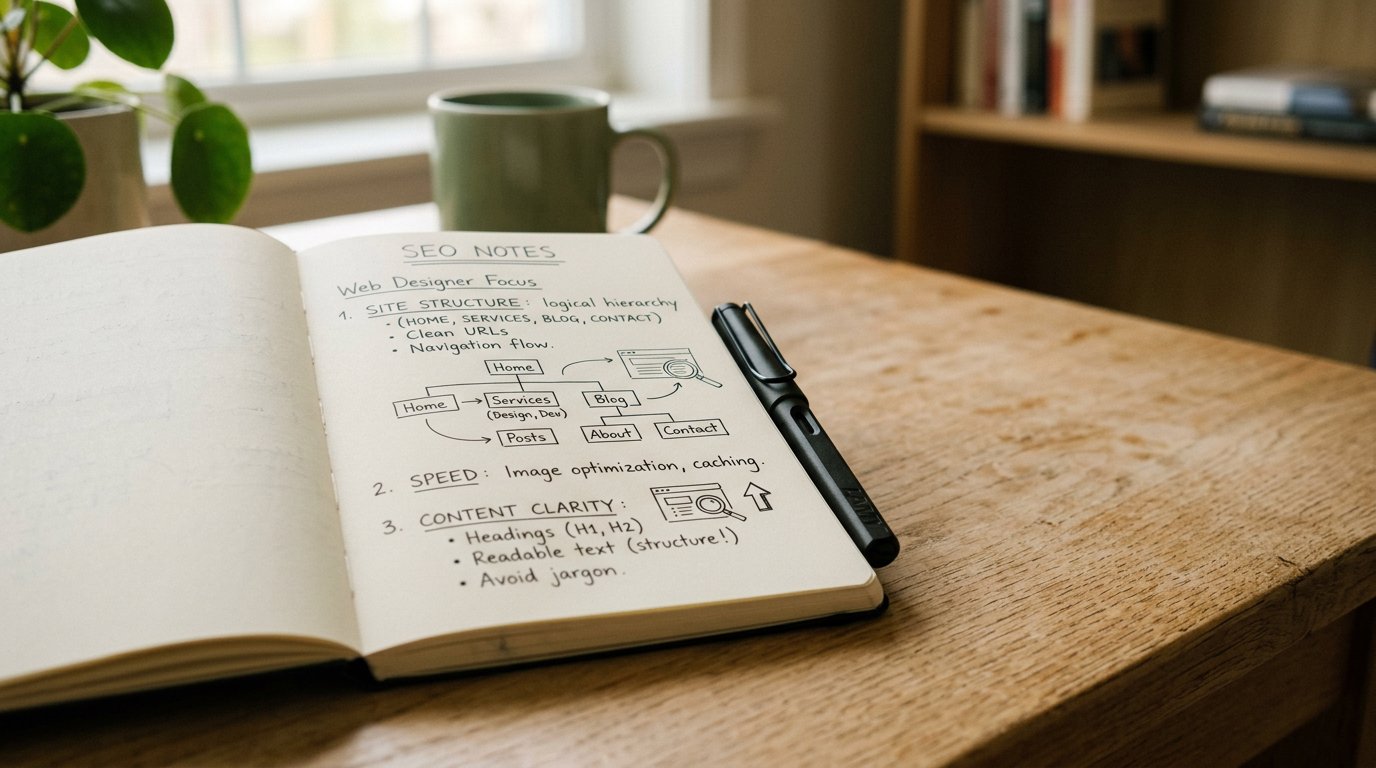
In the modern digital landscape, the line between beautiful aesthetics and high-performing functionality has blurred. For web designers, search engine optimization is no longer just a task for the marketing department to handle after a site goes live; it is a fundamental component of the design process itself. As search engines evolve into "answer engines," the priority has shifted from simple keyword placement to comprehensive website optimization that prioritizes speed, clarity, and machine readability.
The Shift Toward Answer Engine Optimization
The way users discover information is undergoing a seismic shift. We are moving away from the era of "ten blue links" toward a world where AI assistants—like ChatGPT, Perplexity, and Google’s AI Overviews—synthesize information and provide direct answers. According to recent industry analysis, search systems are increasingly prioritizing clear relationships between brands, services, and topics rather than simple keyword repetition.
For a web designer, this means that site architecture and content hierarchy must be designed for "retrievability." If a site’s structure is too complex or its content too vague, AI models may fail to retrieve the relevant data needed to generate a cited answer. This transition highlights the importance of web development SEO, where the technical foundation of the site determines its visibility in both traditional search and AI-driven discovery.
Performance-First Design and Speed
Website optimization techniques in 2026 place a heavy emphasis on performance. A visually stunning site that takes five seconds to load is a failure in the eyes of modern search algorithms. Expert reports on website optimization trends emphasize that mobile optimization and performance-first design are non-negotiable priorities.
When designing a site, you must consider:
- Asset Weight: Optimizing images and using modern formats like WebP or AVIF to reduce file sizes without sacrificing quality.
- Code Bloat: Minimizing the use of heavy JavaScript frameworks that delay the "Time to Interactive" (TTI).
- Core Web Vitals: Ensuring the site meets Google’s standards for loading performance, interactivity, and visual stability.
Structuring Content for AI and Humans
The way a page is laid out dictates how easily a search engine can parse its meaning. This is often referred to as "relevance engineering." Designers should focus on creating a clear information architecture that mirrors user intent. Instead of burying information in long, unstructured blocks of text, use a clear web page optimization strategy:
- Descriptive Headings: Use H2 and H3 tags to create a logical outline of the page content.
- Direct Answers: Place concise, factual answers to common questions near the top of sections to increase the chances of being featured in AI snippets.
- Structured Data: Implement Schema.org markup to help search engines understand the "entities" on your page, such as products, reviews, or local business details.
Staying visible in this new era requires more than just a one-time setup; it requires a consistent stream of citable content. Terradium handles this by identifying the specific questions your buyers ask AI assistants and deploying a four-agent pipeline to write "answer-ready" articles. These articles are built specifically to be quoted by engines like ChatGPT and Gemini, served via a headless CMS that integrates into your design with a single API call.
Technical SEO for Design-Led Websites
Web design search engine optimization often fails when technical basics are overlooked in favor of visual flair. To ensure a site is fully optimized, designers should adhere to a rigorous technical checklist:
- Mobile-First Indexing: Ensure the mobile version contains the same high-quality content and structured data as the desktop version.
- Internal Linking: Create a "spiderweb" of links that connect related topics, helping search engines establish topical authority.
- Crawlability: Avoid hiding content behind user interactions (like "click to expand" buttons) if that content is vital for SEO.
- Security: Always use HTTPS, as security remains a foundational trust signal for all search engines.
Industry experts at Moz suggest that the future of SEO lies in demonstrating experience and credibility. For designers, this means creating layouts that highlight author bios, trust badges, and clear contact information, all of which signal to search engines that the site is a reliable source of information.
Measuring Success Beyond Rankings
As search becomes more fragmented, the metrics for success are changing. It is no longer enough to track your position for a single keyword; you must now look at "share of voice" and citation rates across AI platforms.
Traditional analytics often misclassify traffic from AI assistants as "direct" traffic, making it difficult to prove the ROI of optimization. Terradium solves this by providing AI Visibility tracking, which samples real prompts across major engines to report where your site is being cited. Its embeddable SDK attributes visitors arriving from AI answers, allowing you to see the real impact of your SEO-driven design choices.
Common Pitfalls to Avoid
When focusing on optimisation site web, designers often fall into a few common traps:
- Over-designing Navigation: While unique navigation can be artistic, search engines prefer standard, hierarchical structures that are easy to crawl.
- Neglecting Accessibility: SEO and accessibility go hand-in-hand. Alt text for images and proper contrast ratios help both screen readers and search engine bots understand your site.
- Ignoring Branded Search: Your brand name is your most important keyword. Ensure your design prominently features your brand identity to capture high-intent branded queries.
Design for Clarity, Speed, and Retrieval
The ultimate goal of SEO for web designers is to create a seamless bridge between the user’s question and your site’s answer. By focusing on website optimization techniques that prioritize performance and structural clarity, you ensure that your work is not only beautiful but also discoverable. In an age where AI answers are replacing the traditional search results page, the most successful designers will be those who build sites ready to be cited. Focus on the user, optimize for the machine, and build for the future of search.
Related articles

How to Track Brand Visibility in AI Overviews
The search landscape is undergoing its most significant shift in decades. As Google rolls out AI Overviews (AIO) globally, the traditional "ten b…
7/17/2026 · 6 min read

Homepage SEO Tips: Be the Source AI Quotes
The landscape of search is undergoing a fundamental shift. In the era of Generative Engine Optimization (GEO) and Answer Engine Optimization (AEO…
7/6/2026 · 4 min read
SEO Web Design: Integrating Content Tools for 2025 and Beyond
In today's hyper-competitive digital arena, the symbiotic relationship between SEO and web design has never been more critical.
9/30/2025 · 9 min read